How Bedtime Stories Can Help Children Who Struggle to Wind Down
Dreamtime
21 May 2026
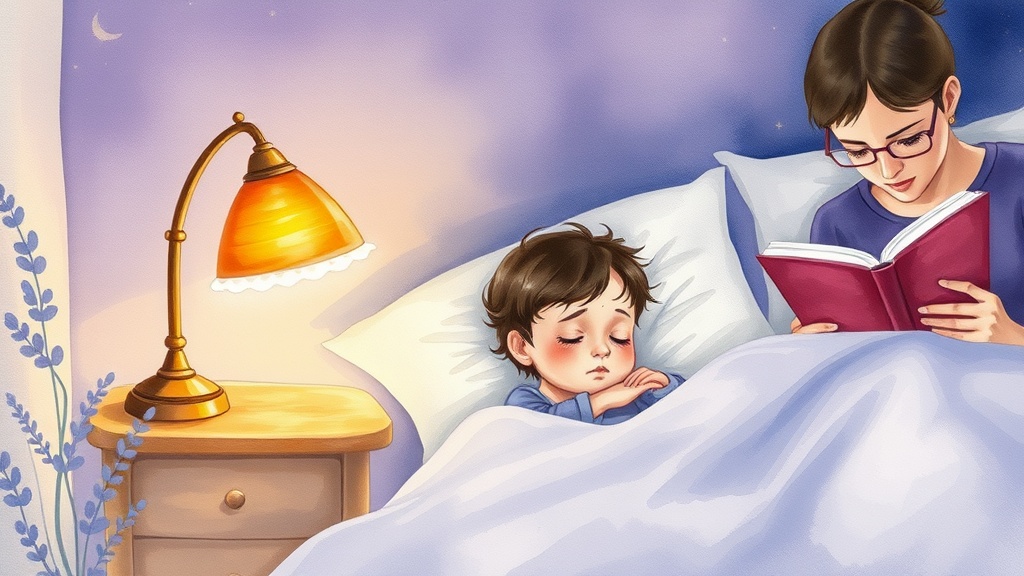
Some children hit the pillow running — minds buzzing, bodies wriggling, sleep feeling miles away. Discover how the right bedtime story, told in the right way, can genuinely help an overtired or overstimulated child shift gears and drift off.
Some children seem to have a reverse gear at bedtime — the later it gets, the more alive they become. If your child bounces off the walls right when the lights should be going down, you are not alone, and you are not doing anything wrong. Many children, particularly those aged 2–10, find it genuinely hard to transition from the busyness of the day to the quiet stillness of sleep. Their nervous systems are still maturing, their imaginations are firing on all cylinders, and the world is simply too interesting to switch off from. The good news? A well-chosen bedtime story, delivered in the right way, can act as a remarkably effective bridge between wakefulness and sleep — if you know how to use it.
Why Some Children Find It So Hard to Wind Down
Before we talk about solutions, it helps to understand what's actually happening in your child's body and brain at bedtime. Children don't automatically produce the hormone melatonin on cue — it rises gradually as light fades and stimulation decreases. When a child has had a busy, exciting, or emotionally charged day, their cortisol (the alertness hormone) stays elevated longer than we'd like.
Screen time in the hour before bed is a well-known culprit, but it's not the only one. Noisy siblings, after-school activities that run late, a rushed dinner, or even a really fun day at the park can all keep a child's nervous system in "go" mode. Add in a child who is naturally sensitive, highly imaginative, or prone to anxiety, and you've got a recipe for a very long bedtime.
The key insight here is that the wind-down process needs to begin before your child is in bed — and that's precisely where a calm storytime ritual earns its keep.
How Stories Help the Brain Shift Gears
Storytelling works on children's neurology in several genuinely useful ways at bedtime. When a child listens to a story — rather than watching one — their brain enters a mode of relaxed, focused attention. They're engaged enough that racing, anxious, or overexcited thoughts are gently displaced, but they're not being stimulated by fast-moving visuals or interactive demands.
Research into the "default mode network" — the part of the brain active during imagination and narrative thinking — shows that story listening encourages a gentle, inward-focused state. Heart rate slows. Breathing becomes more regular. Muscles begin to release tension. In short, a story literally guides the body towards the physiological conditions needed for sleep.
There's also the comfort of predictability. When a child knows that story time comes next, and then sleep comes after, their brain stops scanning for what else might happen. That sense of "I know what's coming" is deeply calming for young children.
Choosing the Right Story for a Child Who Struggles to Settle
Not all stories are equal at bedtime. A gripping adventure full of chase scenes and cliffhangers might be wonderful at 3pm — but at 8pm, it's likely to have the opposite effect to what you're hoping for. Here's what to look for instead:
- Gentle pacing. Stories that meander rather than race, with moments of description and sensory detail ("the warm breeze carried the smell of honey and pine"), naturally slow a child's mental pace.
- A reassuring emotional tone. Stories where the world is fundamentally safe and kind, where problems are solved calmly, and where characters end up somewhere cosy and settled.
- A familiar, beloved protagonist. When children hear about a character they know and love — especially one who shares their name or interests — they relax into the story more quickly. The cognitive work of "getting to know" a new character is removed.
- A satisfying, sleepy ending. Stories that literally end with the character drifting off to sleep are surprisingly effective at giving children implicit permission to do the same.
This is one of the reasons personalised stories can be particularly powerful for children who struggle to settle. When a child hears their own name, their favourite hobby, or their beloved pet woven into the narrative, the story feels safe and familiar from the very first sentence — which means less mental effort to engage, and a faster descent into that lovely drowsy state.
Apps like Dreamtime generate a brand-new personalised story every night, tailored to your child's name, age, and interests, complete with narration — which takes the pressure off parents to conjure something magical from scratch after a long day.
How to Tell (or Read) a Story in a Way That Calms
The way you deliver a story matters almost as much as the story itself. A few small adjustments to your storytelling style can make a significant difference:
Slow your voice right down. Most of us naturally speed up when we're tired or when we sense our child is restless. Try the opposite — elongate your words slightly, pause at the end of sentences, and let the silence breathe.
Lower your pitch and volume gradually. Starting at a normal conversational volume and becoming progressively quieter throughout the story mirrors the process of falling asleep. By the final pages, you might be barely above a whisper.
Dim the lights before you begin. Even ten minutes of softer lighting before the story starts helps signal to the body that the day is ending. A small lamp or nightlight rather than the main overhead light makes a real difference.
Resist the urge to ask lots of questions. Interactive storytelling is wonderful at other times of day, but at bedtime, too many "what do you think happens next?" prompts can re-engage an active brain when you want the opposite. Keep the flow gentle and one-directional.
Stay calm yourself. Children are extraordinarily attuned to parental energy. If you're rushing through the story because you're exhausted and desperate for them to sleep, they'll feel it. Taking three slow breaths before you begin — for your own sake — genuinely helps.
Building a Consistent Wind-Down Sequence
The most effective thing you can do for a child who struggles to wind down is to make bedtime predictable, night after night. A consistent sequence of events — bath, pyjamas, teeth, story, sleep — teaches the brain to start producing melatonin at the same point each evening, almost like a conditioned response.
Story time works best when it is always the last thing before lights out (not followed by trips to the kitchen, long conversations, or requests to check under the bed). Its position at the very end of the routine gives it power — the brain learns that "story ending = sleep time," and over weeks, that association becomes automatic.
For children who are especially resistant, it can help to give them a small sense of agency within the routine: letting them choose between two story options, or pick the character's name, keeps the routine feeling collaborative rather than imposed.
You're Already Doing Something Wonderful
If you're reading this, you're clearly a parent who thinks carefully about your child's wellbeing — and the fact that you're already including stories in your bedtime routine puts you ahead of the game. Storytime isn't just a stalling tactic or a nice-to-have; it's a genuinely powerful tool for helping children regulate their emotions, calm their nervous systems, and step willingly into sleep.
Be patient with the process. Some children need several weeks of a consistent routine before their bodies truly learn to wind down on cue. But they will get there — and on the other side of that persistence is a bedtime that feels less like a battle and more like a gift you give each other at the end of every day.
Give your child a new story every night
Dreamtime creates personalised bedtime stories with beautiful illustrations, tailored to your child, every single night.
Start your free trial →