How Bedtime Stories Build Your Child's Vocabulary (Without Any Extra Effort)
Dreamtime
12 June 2026
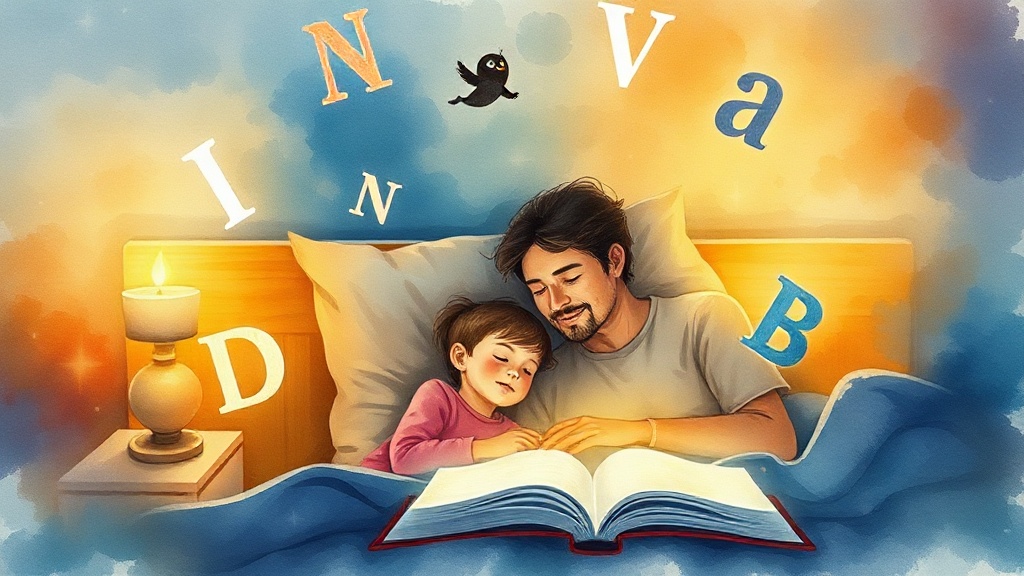
Every story you share at bedtime is quietly doing double duty — soothing your child to sleep and supercharging their language skills. Here's the science behind it, and how to make the most of those precious minutes.
There's a quiet kind of magic happening every time you open a book with your child at bedtime. While you're focused on winding them down and getting them off to sleep, their brain is doing something remarkable — absorbing words, rhythms, and ideas at a rate that will never quite be matched again. Research consistently shows that children who are read to regularly arrive at school with vocabularies hundreds of words larger than those who aren't. And bedtime, it turns out, is one of the best possible moments for that learning to happen.
Why Bedtime Is Prime Time for Language Learning
It might seem counterintuitive — surely a tired child absorbs less? In fact, the opposite is often true. In the wind-down period before sleep, the brain shifts into a quieter, more receptive state. There's less competition from the sensory noise of the day: no playground chatter, no screens, no siblings clamouring for attention. Your child is still, their focus is on you and the story, and their emotional guard is lowered.
Neuroscientists have found that the brain actively consolidates new information during sleep, transferring it from short-term to long-term memory. This means that words and ideas encountered just before sleep are among the most likely to stick. A new word heard at 7:30pm has a better chance of being remembered the next morning than one heard at lunchtime amid the chaos of the day.
The "Vocabulary Gap" — and How Stories Close It
By the time children start school, there can be a gap of thousands of words between those who were regularly read to and those who weren't. This "vocabulary gap" isn't just about knowing more words — it affects reading comprehension, confidence in class, and even social skills. Children with richer vocabularies find it easier to express their feelings, negotiate with peers, and engage with new subjects.
Stories — particularly those read aloud — are one of the most efficient ways to close that gap, because they naturally expose children to a wider range of vocabulary than everyday conversation does. Think about it: in daily life, you might tell your child that the weather is "cold" or "really cold." A story might describe a morning as "frosty," "biting," "bitter," or "crisp." Each of those words is a new mental tool your child can carry forward.
Simple Ways to Boost the Language Benefits of Storytime
You don't need to turn bedtime into a classroom — the goal is still connection and calm. But a few light-touch habits can quietly amplify the vocabulary benefits without disrupting the cosy atmosphere.
Pause on interesting words. When you come across a word your child might not know — "luminous," "grumbling," "peculiar" — pause for just a second and offer a quick, natural explanation. "The cottage was peculiar — that means really strange and a bit odd." Then carry on. You don't need to quiz them; simply hearing the word used in context plants the seed.
Use your voice expressively. Children learn not just words but the emotional weight behind them. When you read "the giant bellowed," bellow a little. When the character whispers, whisper. This kind of expressive reading helps children understand nuance — that there's a difference between saying something, shouting it, and muttering it — and enriches their own future use of language.
Welcome their questions. Some children interrupt stories constantly, and it can test a parent's patience at 7:45pm. But questions like "What does 'enchanted' mean?" or "Why is she melancholy?" are gold. Answer them warmly, even briefly, and you've just made that word memorable. If you don't know, say so — "I'm not sure, let's find out tomorrow" — and follow up. That curiosity is exactly what you want to nurture.
Revisit stories. Children often ask for the same story again and again, which can feel tedious for parents but is genuinely useful for language. Repetition deepens word learning. The third time your child hears "the traveller trudged through the snow," they're no longer just hearing it — they're owning it.
Talk about the story afterwards. Not in a testing way, but conversationally. "What do you think will happen to the fox?" or "I liked the bit where she was brave — did you?" This kind of open dialogue encourages children to use the new vocabulary they've just encountered, which is where real learning takes root.
What to Look for in Stories That Build Language
Not all stories are equal when it comes to vocabulary building. The richest language experiences tend to come from stories with varied, descriptive language — not just simple, repetitive text. Look for stories that:
- Use vivid, specific adjectives rather than generic ones ("crimson" not just "red")
- Include a range of emotions and help children name them
- Feature different settings, time periods, or fantastical worlds that demand new vocabulary
- Have characters who think, feel, and speak in nuanced ways
This is one of the reasons personalised stories can be particularly effective for older children in the 5–10 age range. When a story is built around your child's specific interests — whether that's dinosaurs, space exploration, or baking — the vocabulary they encounter is relevant and meaningful to them, which makes it more likely to be retained. Apps like Dreamtime, which generate a brand-new personalised story every night, can be a useful complement to a home book collection, introducing fresh language in a context your child already cares about.
The Bigger Picture: Stories as Emotional Vocabulary, Too
It's worth remembering that vocabulary isn't only about nouns and adjectives. Stories teach children to name and understand emotions — a skill that psychologists call "emotional literacy," and one that's closely linked to wellbeing, resilience, and healthy relationships.
When a character in a story feels "jealous" or "overwhelmed" or "relieved," your child gains a word for an experience they may have had but couldn't articulate. Over time, a child who has heard hundreds of stories has a rich internal dictionary of emotional language to draw on — making them better equipped to say "I feel left out" rather than simply acting out, or to recognise when a friend seems "embarrassed" rather than just "weird."
You're Already Doing Something Wonderful
If you're reading to your child at bedtime — even just a few nights a week — you're already giving them one of the most evidence-backed gifts in child development. The vocabulary benefits alone are significant, but they come wrapped in something even more valuable: a sense of safety, connection, and the knowledge that stories matter.
You don't need to do it perfectly. You don't need to pause on every new word or ask all the right questions. The simple, consistent act of sharing a story before sleep is enough to set something in motion that will serve your child for the rest of their life. Keep going — it's working.
Give your child a new story every night
Dreamtime creates personalised bedtime stories with beautiful illustrations — tailored to your child, every single night.
Start your free trial →