How to Use Bedtime Stories to Build Your Child's Vocabulary (Without It Feeling Like a Lesson)
Dreamtime
13 May 2026
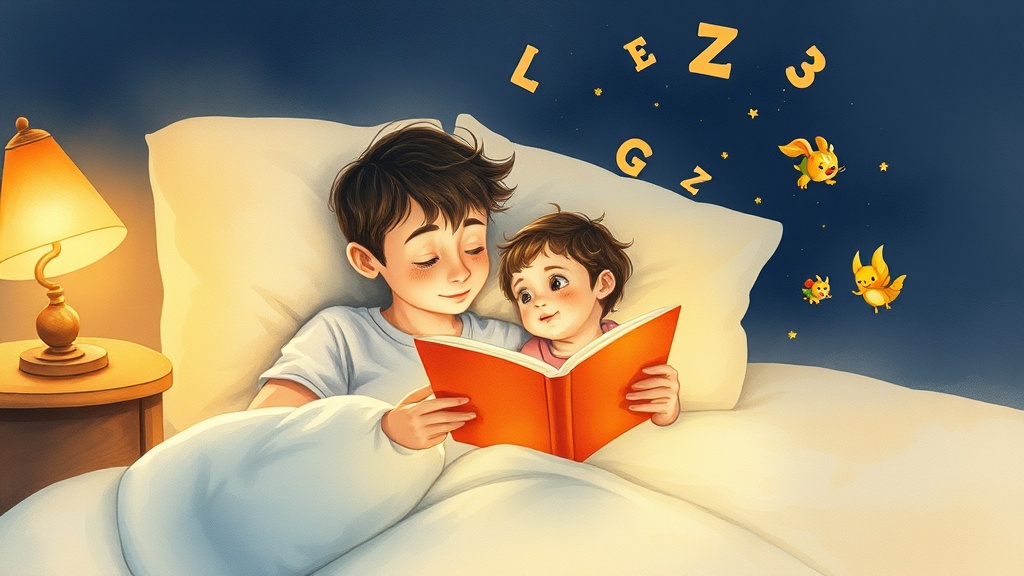
Bedtime stories are one of the most powerful vocabulary-building tools available to parents — and your child doesn't even need to know it's happening. Here's how to make the most of storytime to help your child's language grow naturally. No flashcards required.
Every parent knows that reading to children is 'good for them' — but the reasons go deeper than most of us realise. Bedtime stories aren't just a lovely wind-down ritual; they're quietly one of the most effective vocabulary-building experiences your child will ever have. Research consistently shows that children who are read to regularly arrive at school with significantly richer vocabularies than those who aren't — and that gap has a lasting impact on their reading, writing, and confidence for years to come. The best part? It happens naturally, in the cosiest possible setting, without a single worksheet in sight.
Why Bedtime Is the Perfect Time for Language Learning
Timing matters more than you might think. In the hour before sleep, children's brains are in a calm, receptive state — the mental noise of the day is fading, and they're focused and present. This makes bedtime an unusually rich window for absorbing new language.
Unlike a bustling classroom or a busy afternoon, bedtime storytime offers one-to-one attention, a relaxed pace, and an emotionally warm atmosphere. All of these factors help new words stick. When a child hears the word luminous for the first time while snuggled next to you, with a beautiful illustration in front of them and your voice bringing the story to life, they're far more likely to remember it than if they encountered it on a vocabulary list.
Children also tend to ask more questions at bedtime. That gentle, unhurried environment — where they know you're not about to rush off — often produces the most wonderful, curious conversations. Those questions are vocabulary in action.
The Types of Words Stories Teach (That Everyday Chat Often Doesn't)
One of the most compelling findings in language research is the concept of rare words — vocabulary that doesn't come up in ordinary conversation but appears frequently in books. Words like trembling, enormous, peculiar, or gleaming are rarely used when we're asking children to put their shoes on or eat their dinner. But they appear all the time in stories.
This matters because a rich vocabulary isn't just about knowing lots of words — it's about having access to precise and expressive language. Children who encounter a wide range of words through stories develop a more nuanced understanding of the world. They find it easier to describe how they feel, to understand what they read, and eventually to write with colour and confidence.
Picture books and chapter books naturally introduce:
- Descriptive adjectives — moody, ancient, gleaming, peculiar
- Precise verbs — scrambled, whispered, glided, trembled
- Emotional vocabulary — anxious, relieved, envious, delighted
- Figurative language — similes, metaphors, and expressions children rarely hear elsewhere
All of this arrives in context — wrapped in a story your child actually cares about — which is exactly how language learning works best.
Simple Ways to Make Storytime Even More Powerful for Vocabulary
You don't need to turn bedtime into a tutoring session. A few light-touch habits can dramatically increase how much vocabulary your child absorbs from every story you share.
Pause on interesting words — briefly. When you come across a rich or unusual word, don't skip over it. Read it naturally, then offer a quick, casual explanation: "The wizard's cloak was luminous — that means it was glowing, like it had its own light." Keep it conversational. One sentence is enough.
Let them ask. If your child stops you to ask what a word means, celebrate it. That curiosity is the engine of vocabulary growth. Answer simply, connect it to something they know, and carry on with the story.
Use the word again later. If a story introduces the word famished, try using it naturally over the next few days: "Are you famished after football?" Repetition in different contexts is how words move from short-term memory into lasting knowledge.
Talk about the story afterwards. Even two or three minutes of post-story chat — "What do you think will happen next?" or "How do you think the fox felt when...?" — gives children the chance to use new vocabulary actively, which reinforces it far more effectively than passive listening alone.
Follow their interests. A child who is genuinely gripped by a story absorbs far more than one who's merely tolerating it. When the story features something they love — whether that's dinosaurs, space, fairies, or football — their attention is sharper and their engagement with the language is deeper.
What to Look for in a Story That's Rich in Language
Not all stories are created equal when it comes to vocabulary. Here's what to look for when choosing books for bedtime:
- Varied and expressive language — stories that don't always reach for the simplest word
- Emotional depth — characters who experience a range of feelings, described in nuanced ways
- Vivid description — settings and scenes that are painted in words, not just sketched
- Age-appropriate challenge — the best stories sit just above your child's current language level, gently stretching their understanding
For younger children (ages 2–4), rhythmic, repetitive picture books with rich sensory language work brilliantly. For children aged 5–7, look for stories with more complex plots and a wider emotional range. For older children (8–10), chapter books with distinct narrative voice and layered characters offer enormous language-learning potential.
If you're looking for stories that are automatically tailored to your child's age, interests, and developmental stage, apps like Dreamtime generate a brand-new personalised bedtime story every night — complete with narration and watercolour illustrations — which means children are always hearing language that's matched to where they are, built around the things they love most.
A Note on Listening vs. Reading Aloud Yourself
Parents sometimes wonder whether audiobooks or narrated stories offer the same vocabulary benefits as reading aloud themselves. The honest answer is: both have real value, and they work slightly differently.
When you read aloud, your child gets the added benefit of watching your face, hearing you modulate your voice, and being able to interrupt freely with questions. That back-and-forth is particularly valuable for younger children.
Narrated stories — especially high-quality ones with expressive, warm narration — offer their own advantages. They allow children to build listening skills, develop auditory vocabulary, and engage with language independently. For tired parents at the end of a long day, they also make it easier to stay consistent with storytime even when energy is low.
The most important thing isn't the format — it's the consistency. A story every night, in whatever form works for your family, will make a meaningful difference over time.
You're Already Doing Something Wonderful
If you read to your child at bedtime, you're already giving them one of the greatest gifts a parent can offer — not just the warmth of the ritual, or the closeness it creates, but a growing relationship with language that will serve them for life. You don't need to make it complicated. You don't need special materials or a structured approach.
Just keep reading. Keep pausing on the interesting words. Keep letting them ask questions. And trust that every story you share is quietly building something remarkable inside your child's mind — one bedtime at a time.
Give your child a new story every night
Dreamtime creates personalised bedtime stories with beautiful illustrations, tailored to your child, every single night.
Start your free trial →