Why Bedtime Stories Build Better Readers (And How to Make the Most of Every Night)
Dreamtime
22 June 2026
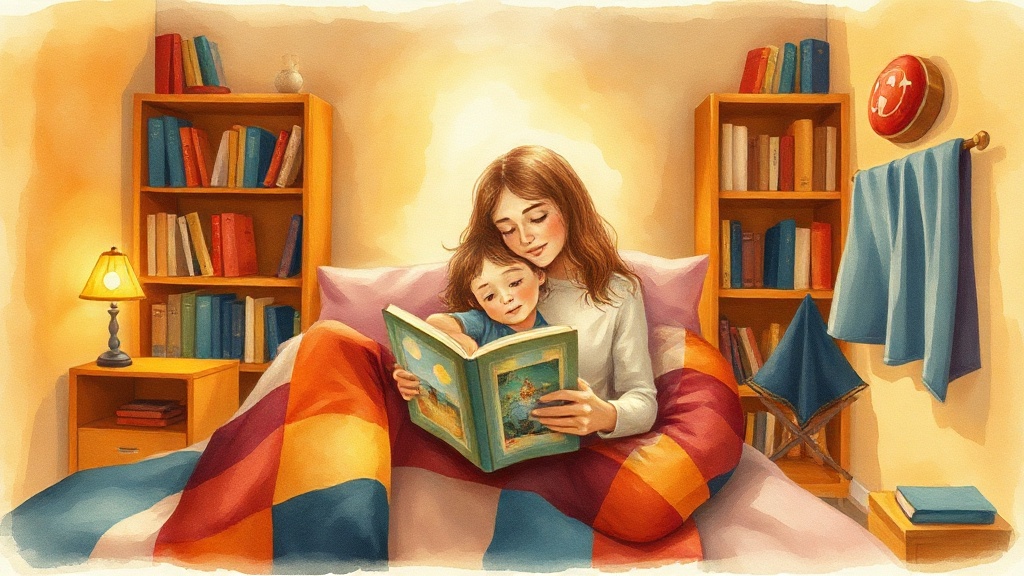
Sharing a story at bedtime does far more than help children drift off — it quietly builds the reading skills they'll rely on for the rest of their lives. Here's what's really happening in your child's brain, and how to make every storytime count.
There's a moment most parents know well: your child is tucked in, the room is dim, and as you read the last line of the story, you glance over to find them wide-eyed and completely absorbed — nowhere near sleep. It can feel like storytime is working against you. But here's the thing: in that moment of absorption, something genuinely remarkable is happening. Long before a child can decode a single word on a page, bedtime stories are laying the neurological groundwork for reading, language, and a lifelong love of books. The humble bedtime story is one of the most powerful educational tools a parent has — and it costs nothing but a little time.
What's Actually Happening in Your Child's Brain
When you read aloud to a child, their brain doesn't passively receive words — it gets to work. Neuroscience research, including landmark studies from Cincinnati Children's Hospital, has shown that shared reading activates areas of the brain associated with mental imagery, narrative comprehension, and language processing, even in children as young as three.
Every story introduces new vocabulary in context. A child who hears the word luminous in a sentence about a glowing moon doesn't need a dictionary — the image does the work. Over thousands of bedtime stories, this kind of contextual word learning builds a vocabulary that formal instruction alone can't match.
Equally important is something called phonological awareness — the ability to hear and manipulate the sounds within words. When you read rhymes, repeat refrains, or pause to say "listen to that word — crunch — doesn't it sound just like what it means?", you're training your child's ear in ways that directly predict later reading ability.
The Four Skills Storytime Quietly Teaches
Researchers who study early literacy often talk about the "big five" pre-reading skills. Bedtime stories, done consistently, work on at least four of them without any deliberate effort on your part.
1. Vocabulary. Children who are read to regularly encounter words they'd almost never hear in everyday conversation. This gap compounds over time — by age five, children with strong read-aloud histories may know thousands more words than their peers.
2. Print awareness. Even holding a book and watching a finger track left to right teaches children that text moves in a direction, that letters form words, and that words form meaning. These seem obvious to adults, but they're genuinely learned concepts.
3. Narrative comprehension. Stories have structure: a character wants something, something gets in the way, and then something changes. Every bedtime story trains children to follow that arc — a skill that transfers directly to understanding what they read independently later on.
4. Background knowledge. Every story set in a new world, historical period, or unfamiliar situation expands what a child knows about the world. And when children encounter a new text, the more background knowledge they bring, the better they understand it.
How to Read Aloud More Effectively (Without Turning It Into a Lesson)
The best storytime doesn't feel like school — and it doesn't need to. A few small habits can dramatically increase the literacy value of your reading without losing any of the warmth.
Talk about the story, not just through it. Before you start, spend thirty seconds looking at the cover: "What do you think this one's going to be about?" During the story, pause occasionally — not to quiz, but to wonder together: "Oh no, what do you think she'll do?" Afterwards, even a simple "which bit did you like best?" is enough. These conversations, called dialogic reading, have been shown in studies to produce significantly stronger vocabulary gains than passive listening.
Let them lead sometimes. If your child wants you to re-read the same story for the seventeenth time, lean in rather than steering away. Repetition deepens comprehension. The tenth reading is when a child starts to notice things they missed before.
Vary what you read. Picture books, chapter books, poetry, non-fiction about dinosaurs or space — each genre teaches different things. Non-fiction, in particular, is underused at bedtime, and children who hear it regularly grow into readers who can navigate complex informational texts with confidence.
Follow their interests, hard. A child who is obsessed with a topic — whether it's fire engines, fairies, or football — will engage more deeply with a story about that subject. Deep engagement means deeper processing, which means more learning. Passion is a literacy accelerant.
When Your Child Says "That's Boring" — And What to Do
There will be nights when nothing lands. Your child fidgets, sighs, asks if it's over yet. This is normal, and it doesn't mean storytime isn't working — it might just mean you've hit a mismatch between the book and where your child is right now.
A few things worth trying: let them choose the story more often, even if they choose badly. Swap roles and ask them to "read" to you using the pictures. Try an audio narration occasionally — children who listen to stories without holding a book still gain enormous vocabulary and comprehension benefits.
Some families find that a story specifically tailored to their child — one where the protagonist shares their name, their interests, their personality — transforms engagement entirely. It makes sense: it's harder to be bored by a story when you're the one in it. Apps like Dreamtime generate a brand-new personalised story every night, matched to your child's age and interests, which can be a useful way to keep even reluctant listeners engaged on the nights when a familiar picture book just won't cut it.
Building a Storytime Habit That Lasts
Consistency matters more than perfection. Even five minutes of shared reading — on a tired Tuesday, after a difficult day, with a simple board book — does more than the best-intentioned weekend reading marathon that never quite happens.
A few things that help habits stick: attach storytime to something that already happens reliably, like brushing teeth. Keep books physically close to where the bedtime routine ends — on a nightstand, in a small basket by the bed. And let go of the idea that you need to perform. Children don't need theatrical voices or perfect pacing. They need your presence, your attention, and the steady signal that stories matter enough to come back to every single night.
The research is clear, but you probably already knew it in your bones: reading together at bedtime is time that compounds. Every story your child hears tonight is an invisible deposit into a future reader. The returns arrive slowly, and then all at once — the day they pick up a book on their own and don't put it down.
Give your child a new story every night
Dreamtime creates personalised bedtime stories with beautiful illustrations, tailored to your child, every single night.
Start your free trial →