Bedtime Stories About Sharing: Teaching Generosity Through Story
Dreamtime
18 April 2026
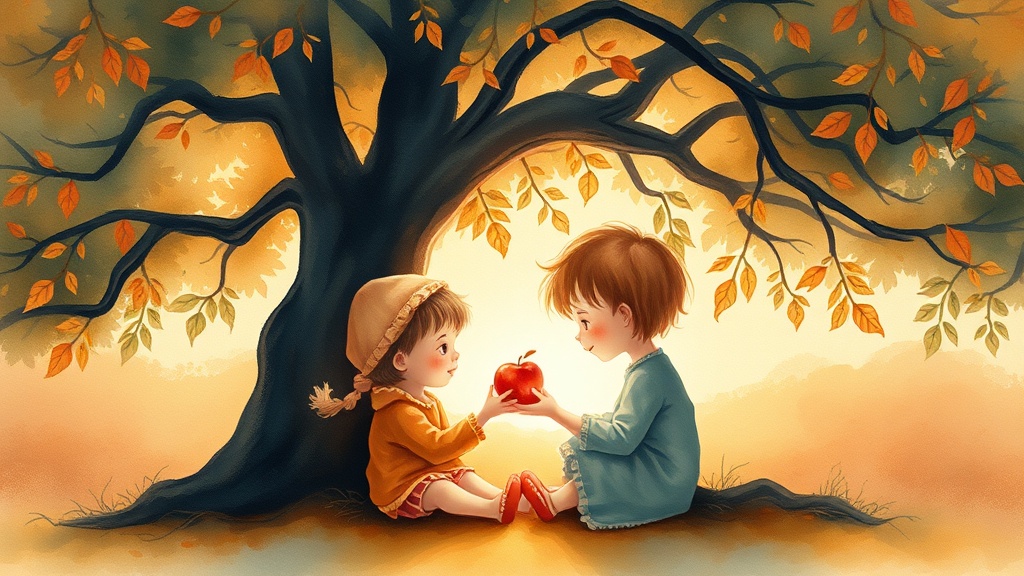
Sharing is one of the hardest lessons for young children to learn — but the right bedtime story can make all the difference. Discover why stories are such a powerful way to teach generosity, and how to use them to support your child at every age.
If you've ever watched two toddlers discover the same toy at the same time, you'll know that sharing doesn't come naturally. It's learned — slowly, imperfectly, and with a lot of parental patience along the way. The good news is that a well-chosen bedtime story about sharing for toddlers can do something that a stern talk in the moment simply can't: it plants the seed of empathy quietly, without the heat of the argument still in the air. Stories let children step inside another character's feelings, try on generosity from a safe distance, and begin to understand why it matters — all while snuggled up at their most receptive time of day.
Why Toddlers and Young Children Struggle to Share
Before we reach for a story, it helps to understand what's actually happening in your child's head when they refuse to hand over the toy. For children under three, sharing isn't just difficult — it's developmentally inappropriate to expect it consistently. Toddlers are in the thick of establishing a sense of self. "Mine" is one of the most important words they'll ever learn, because it means they understand where they end and another person begins. That's not selfishness; that's healthy cognitive development.
Between ages three and five, children begin to grasp that other people have feelings too — the early stirrings of empathy. But understanding something intellectually and acting on it in a charged moment are very different things. A four-year-old who truly loves their friend may still snatch a crayon back without thinking. The impulse is faster than the reasoning.
By ages six to ten, children can genuinely understand fairness, reciprocity, and the social rewards of being generous. But they still need practice, and they still benefit enormously from seeing those values modelled — in the adults around them, and in the characters they love in stories.
Why Stories Teach Sharing Better Than Lectures
When a child is mid-meltdown about a toy, they are not in a state to absorb a lesson about generosity. Their nervous system is flooded and the rational, empathetic part of the brain has essentially gone offline. Any lecture delivered in that moment is likely to bounce off entirely — or worse, be remembered only as a moment of shame.
Bedtime is different. The day is done, the body is winding down, and the mind is in a softer, more receptive state. A story told or read in those quieter moments bypasses the defensiveness children put up when they feel they're being told off. Instead of you should share, the message becomes look how good it felt for this character when they shared — and the child gets to arrive at that conclusion themselves.
Psychologists call this narrative transportation: the way stories allow us to mentally inhabit another person's experience. It's why fiction has always been one of the most effective tools for building empathy. For young children especially, characters in stories become real friends, and the lessons those friends learn feel genuinely meaningful.
What Makes a Good Bedtime Story About Sharing for Toddlers
Not all sharing stories are created equal. The most effective ones tend to share a few key qualities:
The character's reluctance feels real. If a story's hero cheerfully shares without any hesitation, it won't resonate with a child who finds it genuinely hard. The best stories honour the difficulty first — the pang of not wanting to let go — before showing how good it felt to do it anyway.
The reward is emotional, not transactional. Stories that end with "and because he shared his cake, he got two cakes back" are teaching children to share for personal gain. Far more powerful are endings where the reward is a warm friendship, a feeling of pride, or the simple joy of seeing someone else happy.
The stakes feel child-sized. A favourite toy. A seat at the table. The last biscuit. Young children connect most with stories built around the small but enormous dilemmas of their own daily lives.
The characters are at the child's own age and level. A toddler won't fully identify with a teenage protagonist making grand sacrifices. Keep it close to home.
Story Ideas to Read or Tell Tonight
You don't always need a book in hand to tell a great sharing story. Simple, made-up tales told aloud can be just as powerful — and you can tailor them precisely to what your child is working through right now.
Try this simple template: "Once there was a little [animal/child] called [your child's name or a similar name] who had the most wonderful [toy/food/thing they're currently reluctant to share]. One day, a friend came to visit..." Follow the character through the wobble of not wanting to share, the moment of brave decision, and the warm feeling that followed. Keep it simple. Keep it cosy. Let them drift off on a feeling of quiet pride.
For toddlers aged two to three, focus on stories with very simple plots and lots of sensory, emotional language: warm, happy, cosy, big hug. For children aged four to six, you can introduce a small conflict and a satisfying resolution. For older children, you might explore more nuanced ideas — sharing time and attention, not just objects, or sharing with someone who can never give anything back.
If you want a new personalised story every night without the pressure of coming up with one yourself, Dreamtime creates tailored bedtime stories built around your child's name, age, and interests — so a story about sharing can feature their favourite dinosaur or their love of painting, making the lesson land even closer to home.
Building the Habit: Making Generosity Part of Your Bedtime Routine
One story won't transform a reluctant sharer overnight — but a gentle, consistent habit of stories that reflect your family's values absolutely will, over time. Here are a few small ways to make it stick:
Follow the story with a question, not a quiz. Rather than "so what did you learn from that?", try "how do you think the bear felt when his friend shared with him?" Let the conversation be curious, not corrective.
Notice generosity in the day and name it at bedtime. "Do you remember when you let your cousin have a go on the swing today? That was really kind. I felt so proud." Connecting real moments to the values in stories helps children build a coherent sense of who they are.
Let your child choose the sharing story sometimes. Agency matters. When children feel ownership over their bedtime routine, they're more likely to engage with it — and more likely to absorb what's in it.
Be patient with regression. Children who share beautifully one week may refuse entirely the next. This is normal. Keep telling the stories. Keep naming the moments. The roots are going deeper than you can see.
A Gentle Note for Tired Parents
Teaching generosity is a long game, and it starts with the generous act of showing up at bedtime — even when you're exhausted — and offering your child a story, your voice, and a few minutes of warmth before the lights go out. That, in itself, is modelling exactly the kind of giving that you hope to see grow in them. You're doing it already. Keep going.
Give your child a new story every night
Dreamtime creates personalised bedtime stories with beautiful illustrations, tailored to your child, every single night.
Start your free trial →