How to Help Your Child Stop Fighting Sleep When They're Overexcited (Birthdays, Holidays & Big Days Out)
Dreamtime
9 August 2026
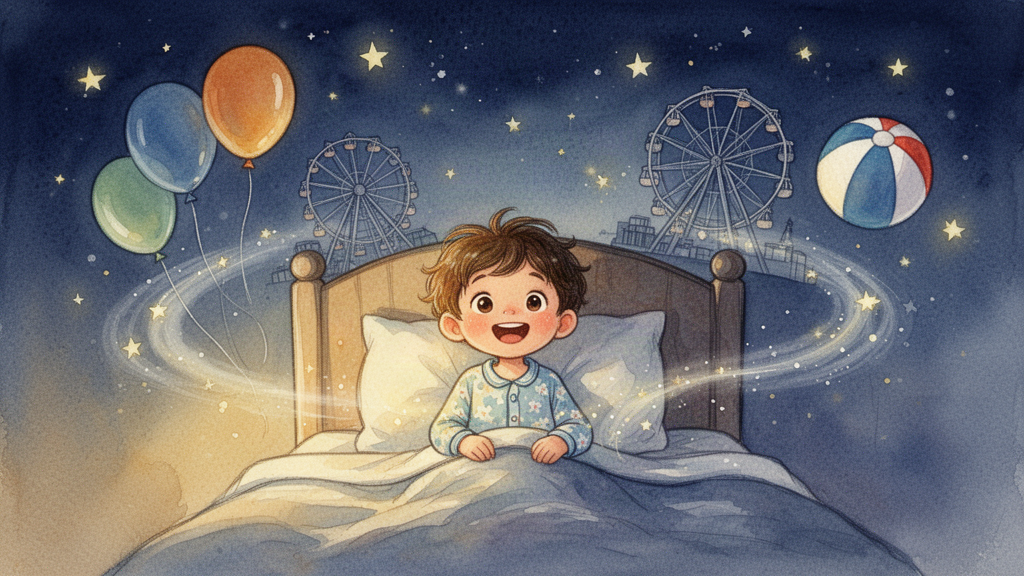
Big days like birthdays, holidays, and school trips leave kids buzzing long after lights out. Here's why overexcitement hijacks sleep and a practical, step-by-step approach to help your child come back down to earth at bedtime.
You've had the birthday party, the trip to the theme park, or the exciting first sleepover invitation delivered that afternoon — and now it's 7pm and your child is bouncing off the walls instead of settling into bed. Their eyes are wide, their words are tumbling out faster than usual, and "I'm not tired" has never felt less true or more insistent. Overexcitement at bedtime is one of the most common — and most misunderstood — sleep disruptors for children aged 2 to 10. The good news is that it's not a discipline problem or a sign your child is overtired in the usual sense. It's a nervous system problem, and once you understand what's happening in your child's body, it becomes much easier to help them land safely at the end of a big day.
Why Excitement Feels Like the Opposite of Tired
When children are excited, their bodies release adrenaline and cortisol — the same stress hormones involved in fear or anxiety, just wearing a happier disguise. These hormones are brilliant at keeping a child alert, energised, and ready to soak up every moment of a fun day. The problem is that they don't switch off the moment the fun stops. A child can be objectively exhausted — heavy-limbed, rubbing their eyes, yawning — while still feeling wired, because their body is still flooded with the chemicals that say "stay alert."
This is why overexcited children often seem paradoxically more resistant to bedtime than usual, not less. Their brain is telling them something exciting is still happening, or that something exciting might happen again if they just stay awake a little longer. Understanding this helps take the frustration out of it: your child isn't being difficult, their biology is genuinely working against sleep for a while.
Start the Wind-Down Earlier Than You Think You Need To
On a normal day, a 20–30 minute wind-down might be enough. After a big day, double it. If bedtime is usually 7:30pm, start easing off the stimulation by 6:30pm rather than 7pm. This gives cortisol and adrenaline more time to naturally decline before you're asking your child's body to do the hard work of falling asleep.
Practical ways to stretch the wind-down window:
- Lower the lights early. Dim lighting cues the brain to begin producing melatonin well before you reach the bedroom.
- Move from big movement to small movement. If they've been running, jumping, or riding rides all day, transition through quieter physical activities — building a puzzle, colouring, gentle stretching — before asking them to lie still.
- Avoid rehashing the excitement right before bed. Save the excited chatter about the day for dinner or the car ride home. In the last 30 minutes before sleep, steer conversation toward calm, ordinary topics.
Give the Excitement Somewhere to Go
Trying to suppress a child's excitement at bedtime rarely works — and can backfire into tears or meltdowns. Instead, give the feeling a controlled outlet earlier in the evening so it doesn't have to come out at 8:15pm when you're trying to leave the room.
A few ideas that work well:
- The "three best bits" chat. Over dinner or bath time, ask your child to tell you their three favourite moments from the day. This lets them process and talk through the excitement while it's still appropriate to be animated, rather than saving it up for bed.
- A drawing or photo recap. If they went somewhere special, let them draw a quick picture of their favourite part before bath time. It gives the excitement a physical output and a sense of completion.
- Physical release before the bath. A few minutes of star jumps, silly dancing, or a pillow fight (yes, really) can help burn off residual adrenaline in a fun, contained way — just make sure it happens well before the wind-down window begins, not during it.
Use a Predictable Ending, Even When the Day Wasn't Predictable
Part of what makes overexcited bedtimes hard is that the day itself broke the usual rhythm — different food, different nap timing, different faces and noise levels. Your child's sense of "what happens next" has been disrupted, and that unpredictability itself is stimulating.
The antidote is to make the very end of the day feel exactly the same as always, even if everything before it was completely different. The same three books, the same phrase you say when you turn off the light, the same cuddly toy in the same spot. Predictability at the finish line signals safety to a nervous system that's had a lot of novelty to process, and it gives your child something steady to hold onto when everything else that day felt thrilling but unfamiliar.
This is where a calming, familiar storytime ritual earns its keep. A story read in the same warm voice, at the same time, in the same cosy spot, acts like a gentle full stop at the end of an exclamation-mark kind of day. Some families find it helps to choose a story that gently echoes the day's excitement and lets it resolve — a tale where the character goes on an adventure and then happily, sleepily, comes home. Dreamtime, for instance, can generate a brand-new personalised story each night featuring your child by name, which some parents use after a particularly big day to create a gentle "coming down" story where the character's own busy day ends in a peaceful, sleepy finish — echoing your child's experience without you needing to write anything yourself.
When Overexcitement Turns Into Overtiredness
Keep an eye out for the tipping point where excitement curdles into overtiredness — marked by silliness turning to tears, giggling turning to whining, or sudden meltdowns over small things. This is a sign the adrenaline has run its course and exhaustion has taken over completely. At this point, talking and processing tends to stop working, and your best move is to simplify everything: fewer words, dimmer lights, more physical closeness, and getting them into bed as gently and quickly as possible, even if it means skipping a step or two of the usual routine.
A Gentle Landing
Big, joyful days are exactly what childhood should be full of — the birthday parties, the sandy beach afternoons, the exciting news that can't wait to be shared. They're not the enemy of good sleep; they just need a slightly longer, gentler runway to land on. With an earlier wind-down, a safe outlet for the excitement, and an ending that feels reassuringly familiar, your child can go from buzzing to peacefully asleep without a battle — and wake up ready for the next big adventure.
Give your child a new story every night
Dreamtime creates personalised bedtime stories with beautiful illustrations, tailored to your child, every single night.
Start your free trial →