Bedtime Stories for Babies — Pitched to Their First Year

Bedtime “stories” for a baby aren’t really stories — they’re cadence. The voice. The pause. The familiar pattern that says this part of the day is winding down. By 4–6 months, most babies have started recognising the rhythm of their parent’s bedtime voice; by 9 months, the same words and animals start to feel like old friends.

At Dreamtime, every bedtime story for a baby is calibrated to that listening experience — short sentences, gentle vocabulary, lots of soft repetition, and a calm resolution every single time. The plot is small on purpose. A bunny finds a leaf. A duckling settles on the pond. The moon comes up.

The child is the listener, not a character — your baby’s voice and presence is what fills the story; the words are the container. Below are two sample stories you can read aloud tonight, or tap generate and we’ll write a fresh one in 30 seconds.

Generate your story — free

30 seconds. Calmly paced. Ready for tonight’s wind-down.

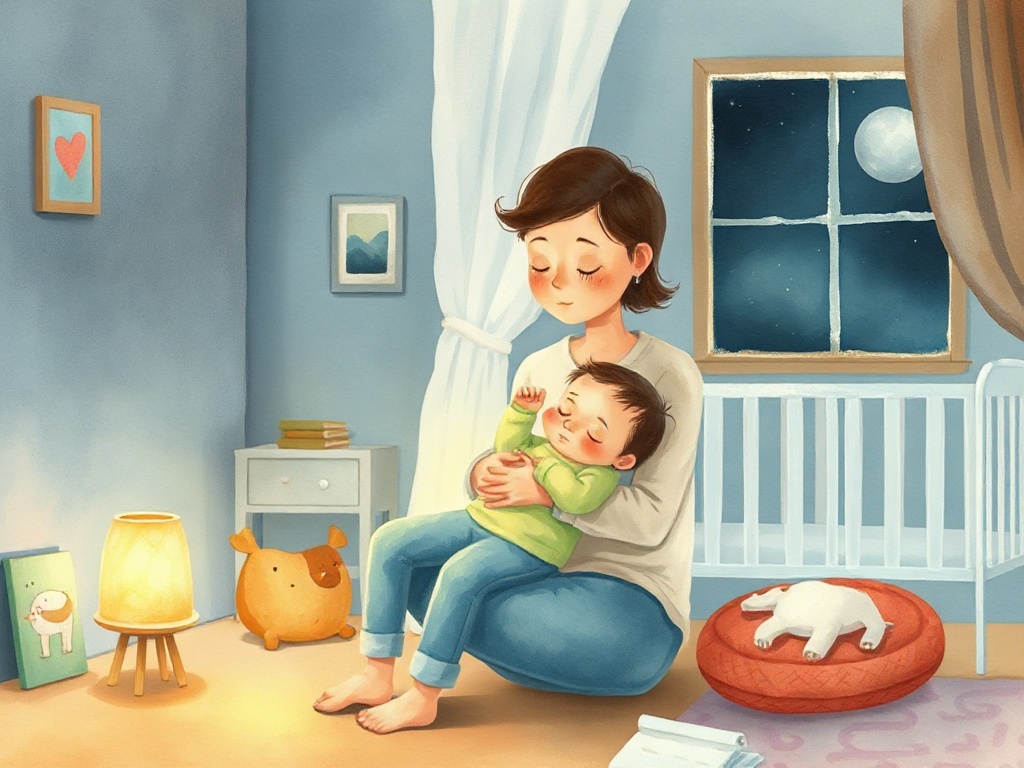
A parent cradling a sleepy baby in a dimly lit nursery at night, a warm lamp glowing and a full moon in the window — a soft watercolour bedtime scene.

What makes a bedtime story work for a baby

  • Cadence over plot. Babies don’t follow plot — they follow the music of your voice. Many parents notice that the same five-minute story read in the same gentle voice settles their baby faster than a varied bookshelf.
  • Repetition is welcome. “And the moon came up. And the bunny went home. And the moon came up. And the bunny went home.” Babies under 12 months thrive on small, predictable repetitions in language. Dreamtime’s baby bedtime stories lean into this deliberately.
  • Always a soft landing. No cliffhangers, no unresolved tension, no sudden noises in the writing. The last line should be a settling line — the moon is up, the leaf is still, the duckling is asleep.
Two sample stories

Two sample bedtime stories for babies

Here’s the kind of story Dreamtime writes for babies. Each uses a named character your baby will start to recognise — Dreamtime’s cast is recurring, so the bunny they meet tonight can come back next week, and the week after.

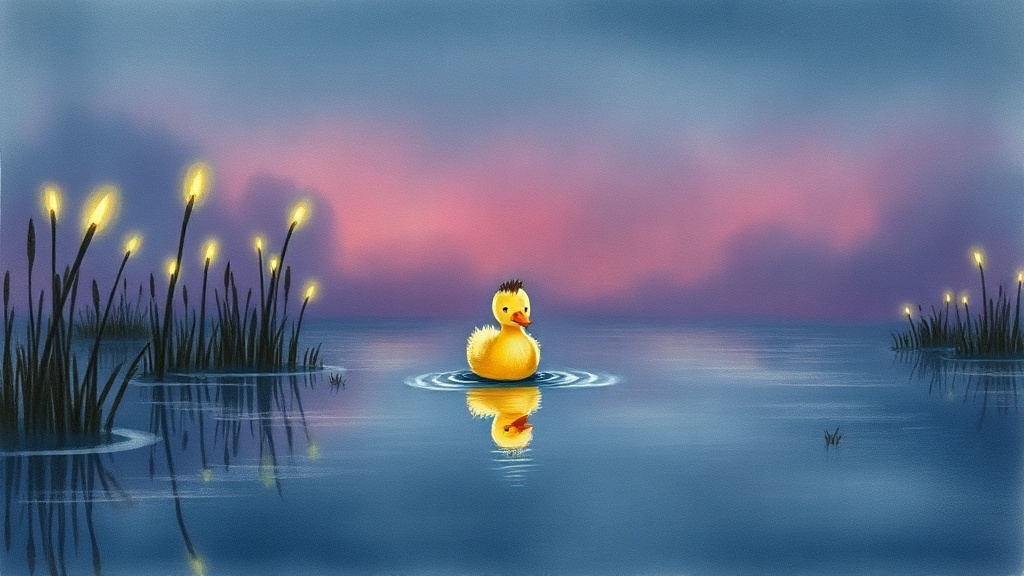
A tiny duckling paddles alone across a glassy, mirror-dark marsh at dusk, with soft glowing will-o'-the-wisps rising one by one above the reeds ahead of her, the sky just deepening to violet.

Pip and the Still, Still Pond

The marsh was very quiet.

The water was very still.

Little Pip paddled across the pond. Her feet went pat, pat, pat beneath the water. Soft ripples spread out behind her. Then the water went still again.

The will-o'-the-wisps were waking up. One by one, little lights flickered on above the reeds. Pale gold. Soft blue. They floated there, very gently. Like tiny lanterns hung up just for her.

The pond was very still.

Pip paddled on. Slowly, slowly. Past the wide green lily pads. Past the sleeping dragonfly. Past the tall, whispering reeds. Her feathers were warm and soft. The water held her up.

The pond was very still.

She reached the reeds. She slipped inside, where the water was dark and quiet. She found her favourite place. The soft mud. The gentle water. The will-o'-the-wisps glowing just beyond the stems.

Pip tucked her head under one little wing.

She waited.

Up over the water, the moon came up. Round and low and slow. It lay down on the pond in a long, bright stripe. Gold on black. Quiet on quiet.

The pond was very still.

The will-o'-the-wisps bobbed softly. The reeds did not move. The moon did not hurry.

Pip's breathing grew slow. Slow and slow and slow.

The water held her. The reeds held her. The night held her.

The pond was very still.

Goodnight, Pip.

Goodnight, pond.

Goodnight, moon.

A tiny bunny with soft grey fur hops alone through a lush moonlit garden at dusk, holding a single large luminous green leaf gently in his mouth, the apple tree visible in the soft distance.

The Softest Leaf in the Glowing Garden

Beau was a small bunny.

He lived in a burrow under the apple tree.

His burrow was warm. It was cosy. It was his.

But tonight, Beau wanted something soft. Something very, very soft.

He hopped into the garden. Hop. Hop. Hop.

He sniffed a big leaf. Too rough.

He touched a round leaf. Too crinkly.

He found a long leaf. Too stiff.

Then — oh. There it was.

A leaf so soft. So gentle. So green.

Softest leaf in the whole garden.

Beau picked it up. He carried it home. Hop. Hop. Hop.

Down into his burrow. Down where it was warm.

He set the leaf down. He patted it once. He patted it twice. He patted it three times.

So soft. So soft. So soft.

Beau turned around slowly. He curled into a small round shape. His ears folded down. His nose went still.

Outside, the moon rose up over the apple tree.

It looked through the roots. It looked through the earth. It found Beau, all curled on his soft, soft leaf.

The garden was quiet. The apple tree was still. The moon was round and silver and slow.

Beau breathed in. Beau breathed out.

His eyes grew heavy. Then heavier. Then still.

Goodnight, Beau.

Goodnight, garden.

Goodnight, moon.

Why age calibration matters at 0–12 months

Your baby’s brain is doing more work right now than it ever will again — building the auditory patterns that become language. Bedtime is one of the few moments in the day where they hear their parent’s voice in a calm, sustained, predictable rhythm. That’s not noise to fill a room. It’s input that matters.

A bedtime story calibrated to a baby uses short sentences, simple concrete words (“moon”, “leaf”, “bunny”, “soft”), lots of soft repetition, and a slow, settling cadence. Not a one-size-fits-all picture book. Not a chapter from something written for a 5-year-old.

Dreamtime does this calibration automatically from your household setup — pitch the youngest age you’ve entered, and every story for that household gets pitched there. As your baby grows into toddlerhood, the stories grow with them.

Tonight’s bedtime story for your baby is 30 seconds away — gentle, repetitive, calmly resolved.

Popular themes for babies

Some themes work for babies; some are too much. Here’s the gentle set — soft, close-to-home, and slow.

  • Bunnies
  • Cats
  • Dogs
  • Horses

What we don’t write for babies: dragons, witches, anything with sudden plot twists or villains. These themes work brilliantly for older listeners — Dreamtime makes the call automatically from the youngest age in your household.

Frequently asked questions about bedtime stories for babies

At what age can I start reading bedtime stories to my baby?

Most parents start within the first few weeks — not because the baby “follows” the story, but because the voice and rhythm matters. By 4–6 months, many babies start recognising the cadence; by 9 months, repeated words and animal names start to feel familiar. Dreamtime is comfortable from day one — the language is short and soft enough that it works whether your baby is 3 weeks or 11 months.

How long should a bedtime story be for a baby?

Short. 1–3 minutes is plenty. Babies under 12 months don’t have the attention span for a 5-minute story, and bedtime is the wrong moment to stretch them. Dreamtime’s baby-tier stories are deliberately short — around 150 words — with lots of soft repetition.

My baby seems to like the same story over and over. Should I rotate?

Repetition is genuinely good for babies — they’re learning the words by hearing them many times. There’s no harm in reading the same Dreamtime story for a week. When you’re ready for a fresh one, tap generate.

What kind of stories should I avoid at bedtime?

Anything with sudden noises in the writing (“BANG!”), unresolved tension, scary characters, or harsh transitions. Many bedtime story collections were written for older children and aren’t pitched for babies — Dreamtime does that pitch automatically.

Does my baby appear as a character in the story?

No — and that’s a deliberate choice, not a missing feature. Dreamtime writes stories for your baby, not about them. At this age, your voice and presence is what makes the story land — the characters in the words don’t need to be them. Their name is captured for the UI display only (the app greets them); it’s never used in the story text. If they have a sibling or a pet, those names aren’t in the story either — we focus on the cadence and the soft landing.

Can I read a Dreamtime story without sound, in a quiet voice?

Yes — that’s exactly the point. Dreamtime stories for babies are written for your voice, not for an audio narration. Read it in whatever soft tone settles your baby. Many parents find their natural bedtime voice is half a notch quieter than their day voice; the stories are paced for that.

Tonight’s story for your baby — gentle, short, calmly resolved.