How Bedtime Stories Build Your Child's Vocabulary (Without Them Even Noticing)
Dreamtime
24 May 2026
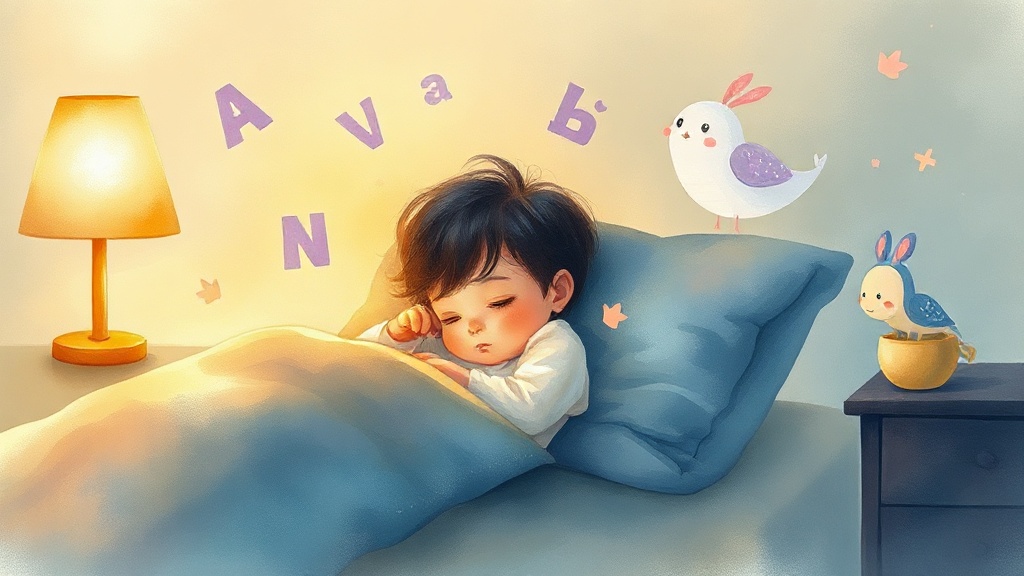
Every bedtime story is a secret language lesson — and your child is soaking it all in. Discover how nightly storytime supercharges vocabulary development in children aged 2–10, and simple ways to make the most of every page.
Every night, as you settle into that familiar spot beside your child and open a book, something remarkable is quietly happening in their brain. Long before they can sound out a single letter, children are absorbing language at a breathtaking rate — and bedtime stories are one of the most powerful engines driving that growth. Research consistently shows that children who are read to regularly arrive at school with significantly richer vocabularies than those who aren't. The good news? You don't need to do anything complicated. The simple, warm ritual you're already doing — or thinking about building — is enough to give your child a genuine head start.
Why Bedtime Is the Perfect Moment for Language Learning
It might seem counterintuitive to think of bedtime as prime learning time. Your child is winding down, their eyes are drooping — surely their brain is clocking off too? In fact, the opposite is true. As the day's stimulation fades and the environment grows calm and quiet, children become surprisingly receptive. There are fewer distractions competing for their attention, and the cosy, safe feeling of being tucked in beside a trusted adult creates the ideal emotional conditions for learning.
Neuroscientists call this the "relaxed alertness" state — a sweet spot where the brain is calm but engaged, making it especially good at absorbing and encoding new information. Pair that with the emotional warmth of storytime, and new words heard at bedtime are far more likely to stick than the same words encountered during a busy, distracted afternoon.
The "Word Gap" — and How Stories Help Close It
You may have heard of the "word gap" — the well-documented difference in vocabulary size between children from different backgrounds by the time they start school. Studies have found that by age three, some children have heard millions more words than others, and that gap has measurable effects on reading ability and academic confidence for years to come.
Bedtime stories are one of the most accessible and enjoyable ways to close that gap, regardless of your circumstances. Books — especially picture books and illustrated stories aimed at young children — naturally use richer, more varied language than everyday conversation. When you chat with your child, you tend to use the same comfortable, familiar words. A story, by contrast, might introduce words like shimmering, enormous, reluctant, or horizon in a context that makes their meaning immediately clear from the pictures and the plot. This is called "incidental vocabulary learning," and it's surprisingly effective.
Research by literacy expert Dr. Dominic Massaro found that picture books contain nearly three times as many rare words as typical parent-child conversation. Every story you read is essentially a vocabulary workout — one your child actively enjoys.
How to Make Storytime Even Richer for Language Development
You don't need to turn storytime into a lesson to amplify the language benefits. A few natural, light-touch habits can make a big difference:
Pause and wonder aloud. When you encounter an interesting or unfamiliar word, you don't need to stop and define it formally. Simply model curiosity: "Ooh, it says the dragon was 'ferocious' — I wonder what that means? He looks pretty angry, doesn't he!" This shows your child how to work out meaning from context, a crucial reading skill.
Ask open questions, not closed ones. Instead of "Did the rabbit find the carrot?" try "Why do you think the rabbit was feeling worried?" Open questions encourage children to reach for more complex language to express their thoughts, rather than a simple yes or no.
Revisit favourite stories. There's a very good reason children ask for the same book again and again — repetition is how young brains consolidate learning. Each re-read, your child picks up words they missed the first time and starts to use them with confidence. Resist the urge to always push for something new.
Connect words to real life. If a story mentions a meadow, point one out on your next walk. If a character feels apprehensive, name that feeling the next time your child seems nervous. Bridging the gap between story-world words and the real world cements new vocabulary far more deeply than any flashcard.
Let them "read" to you. From around age three, encourage your child to narrate from the pictures, make up what happens next, or retell a favourite story in their own words. This active storytelling stretches their expressive vocabulary — not just the words they understand, but the ones they can actually use.
What to Look for in a Story That Will Stretch Your Child's Language
Not all books are equally rich from a language perspective, and that's absolutely fine — you want a mix. But if vocabulary development is on your mind, keep an eye out for:
- Varied, descriptive language — stories that paint pictures with words, not just plot
- Characters with rich inner lives — tales that name emotions precisely (frustrated, curious, triumphant) rather than just happy or sad
- Natural repetition with variation — classic story structures where phrases are repeated but with small changes, helping children predict and then notice the new element
- Topics slightly outside your child's everyday experience — stories set in jungles, under the sea, or in fantasy worlds naturally introduce new nouns and concepts
This is one reason parents love apps like Dreamtime, which generates a brand-new personalised bedtime story every night tailored to your child's age and interests. Because each story is fresh, children encounter a wide and varied range of vocabulary over time — all wrapped up in a narrative that features their own name and the things they love most.
A Note on Screen Time — and When Digital Stories Work Well
Many parents wonder whether audiobooks, story apps, or read-along e-books offer the same language benefits as a physical book. The research here is nuanced. What seems to matter most is the shared, interactive element — the pausing, the questioning, the discussing. A child passively listening to a story alone gains less than a child experiencing that same story alongside an engaged adult.
That said, digital stories read together — snuggled up, with a parent commenting and reacting — can be just as rich as a paper book. The medium matters far less than the conversation around it.
The Long Game: Vocabulary Today, Confident Readers Tomorrow
It's worth stepping back and appreciating what those few quiet bedtime minutes are really building. A child with a wide vocabulary doesn't just do better in English lessons — they find it easier to understand maths problems, engage with science concepts, and articulate their feelings in social situations. Vocabulary is, in a very real sense, a tool for navigating the world.
And the wonderful thing is that for your child, none of this feels like learning. It feels like the best part of the day — the warm lamp, the cosy duvet, and a story that carries them gently toward sleep. You're not just helping them drift off. You're quietly, lovingly building the foundations of a lifelong love of language — one bedtime story at a time.
Give your child a new story every night
Dreamtime creates personalised bedtime stories with beautiful illustrations — tailored to your child, every single night.
Start your free trial →